If you are not planning on using the pool going forward, turn off your heater.
Add a phosphate remover to remove algae’s food source. Brush out and vacuum all resulting debris from the pool, and then clean out pool skimmer and pump strainer.
Because New Jersey weather often experiences freezing temperatures during winter, drain the pool until the water line rests 4-6 inches below the tile line or skimmer. This step is crucial to protect your pool against frozen water expansion that could cause damage to the tile and coping.
Pool chemistry must also be measured to determine if additional chemical application is needed to achieve balanced water aiming for the following water readings:
Total alkalinity 80-120 ppm
pH 7.4-7.6
Calcium Hardness 200-400 ppm
Consider the addition of winterizing chemicals that combat metal stains, calcium scale, and algae based on your pool’s needs.
Pool chemicals lose efficacy after one season. Discard old chemicals according to label instructions and stock up on needed items for the winter.
Shock and chlorinate to oxidize organic contaminants and control bacteria and algae spores. Aim for a chlorine level of 2.0-4.0 ppm at close.
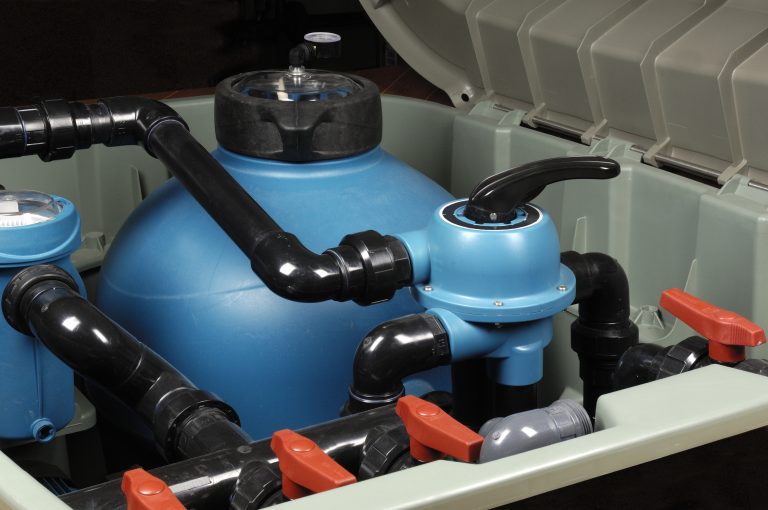
Run the filter for a 4-12 hour cycle for a complete water turnover. Backwash or manually clean pool filter to prolong the life of the filter and simplify re-opening next season.
Drain pool lines, pump filter, heater and any other equipment. Cut off power to filter.
Clean, remove, and store accessories such as slides and pool furniture eliminating the chance that a blast of winter wind will send them flying and cause costly damage.
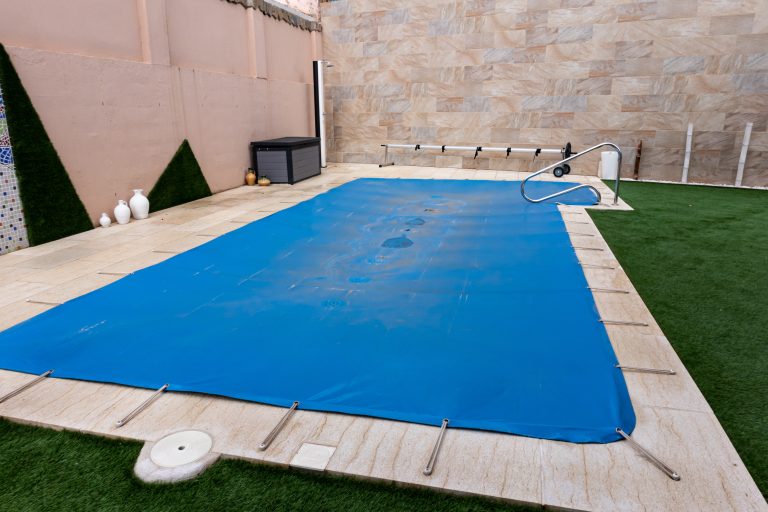
Apply safety or winter cover and anchor securely (safety covers are recommended because they provide protection to keep out accidental animal intruders or winter debris).
Don’t forget to regularly monitor water chemistry during winter months and inspect for damage to cover and equipment especially after storms.